Doing More With Less.
Leading a small, fragmented team to deliver large-scale product transformation

Overview
Role: Head of UX Design
Team: 6 → 4 product designers (post-RIF)
Scope: Desktop rewrite + mobile re-imagined experience
Context: No systems, no processes, no design leadership
Impact: Delivered multiple major product initiatives while transforming team performance and scalability
When I joined Limble, the design team was fragmented, under-resourced, and operating without systems or leadership. At the same time, the business needed to deliver two major product initiatives in parallel.
I was responsible for rebuilding the team, establishing structure, and delivering high-quality product work—simultaneously.
The Situation
The team was starting from near zero:
No design system adoption, team templates, or standards
No critique culture or feedback loops
Designers working in silos
At the same time:
Engineering had already started a major rewrite before design was involved
The company direction had shifted
The team’s skills didn’t fully match new needs
And then:
Headcount dropped from 6 → 4 product designers
We needed to deliver more work, faster—with fewer people and no foundation.
This wasn’t just a delivery problem—it was a team and system problem.
The Challenge
This wasn’t just a delivery problem—it was a team and system problem.
Deliver two major product initiatives in parallel
Build a cohesive product experience across desktop and mobile
Establish process, quality, and consistency from scratch
Adapt team skills to match new business direction
Work under active development pressure (“designing the plane while flying it”)
Why This Was Hard
No existing foundation (systems, process, or leadership)
Reduced team capacity mid-stream
Misalignment between design, product, and engineering
High delivery expectations with unrealistic resourcing
Success required solving team structure, process, and product delivery at the same time.
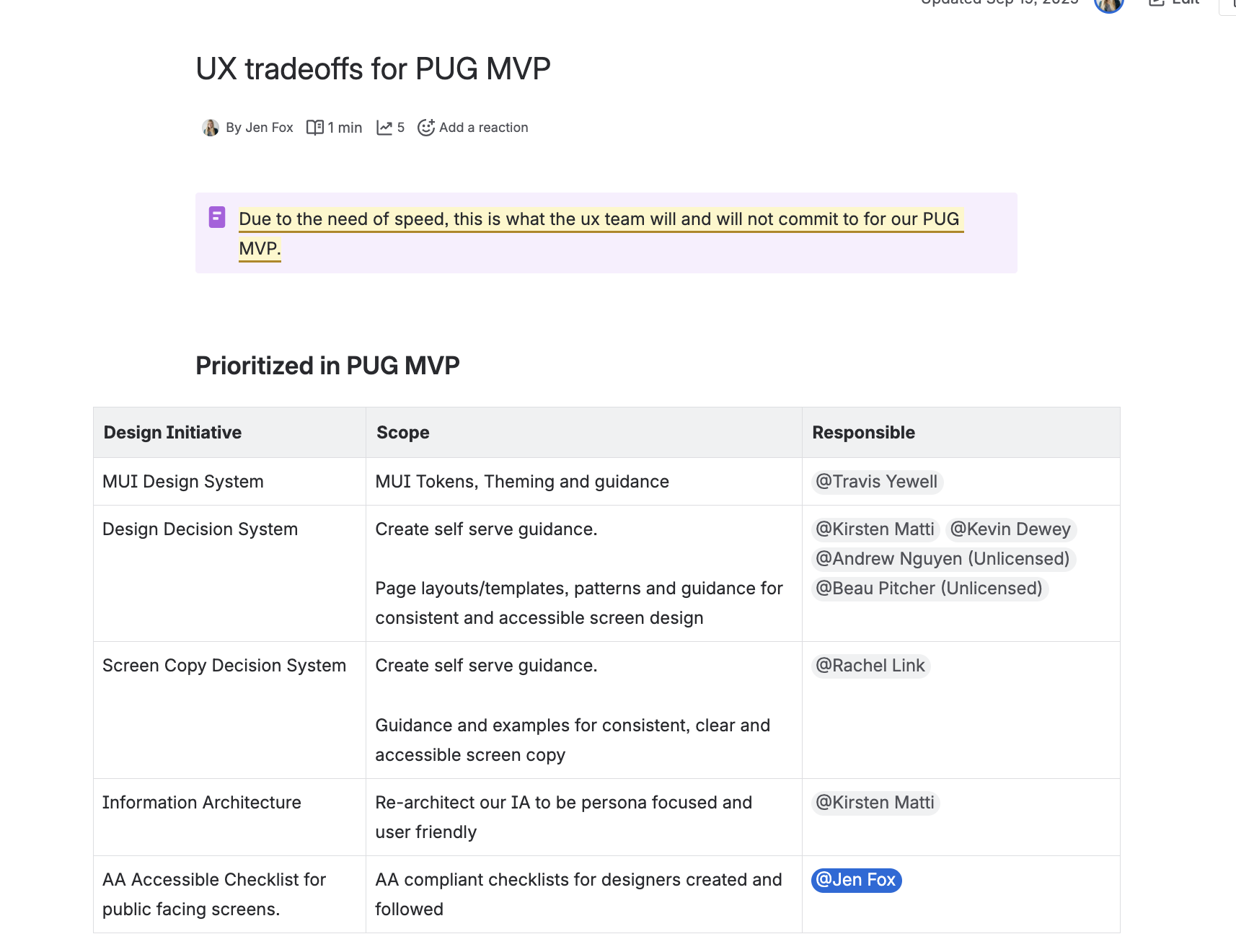
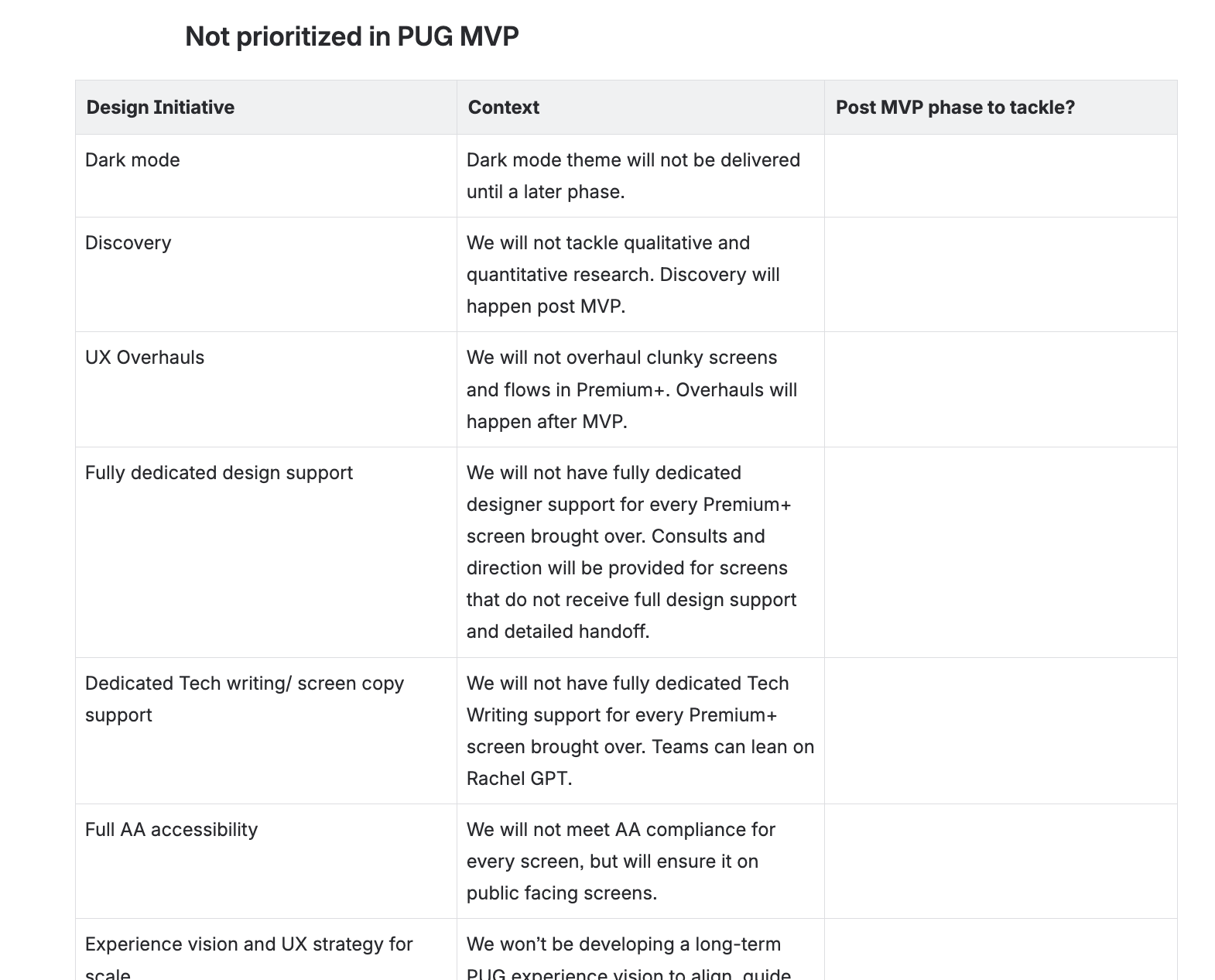
Turn a small team into a force multiplier by building alignment, specialization, and systems.
Strategy
I focused on one core principle:
Turn a small team into a force multiplier by building alignment, specialization, and systems.
This translated into three priorities:
Create alignment across teams
Build the right skills and structure
Establish scalable systems to increase velocity and quality
Key Decisions
1. Align the Organization Before Scaling Output
I led a 3-day onsite with design, product, engineering, and leadership to align on:
Strategy
Priorities
Ownership
Why: Misalignment was slowing execution more than lack of resources
Tradeoff: Short-term pause for long-term speed
2. Fix Team Structure Before Increasing Workload
I evaluated the team, made difficult personnel decisions, and hired for critical gaps (design systems).
Why: The existing team structure couldn’t support business goals
Tradeoff: Short-term disruption to enable long-term performance
3. Build Systems in Parallel With Delivery
We created:
Design systems (mobile + desktop)
Templates and reusable components
Critique and feedback processes
Why: Without systems, output wouldn’t scale
Tradeoff: Additional overhead during already high-pressure delivery
4. Embrace “Designing While Building”
We integrated design into active development rather than trying to slow engineering down.
Why: Stopping development wasn’t an option
Tradeoff: Required rapid iteration and constant alignment
How I Led the Work
I focused on enabling the team to move faster and make better decisions:
Established design critique and feedback culture
Introduced AI tools to accelerate workflows
Built research capability (testing pool + rapid validation)
Created clear ownership and accountability
Maintained alignment across stakeholders as priorities shifted
This shifted the team from reactive → structured and strategic.
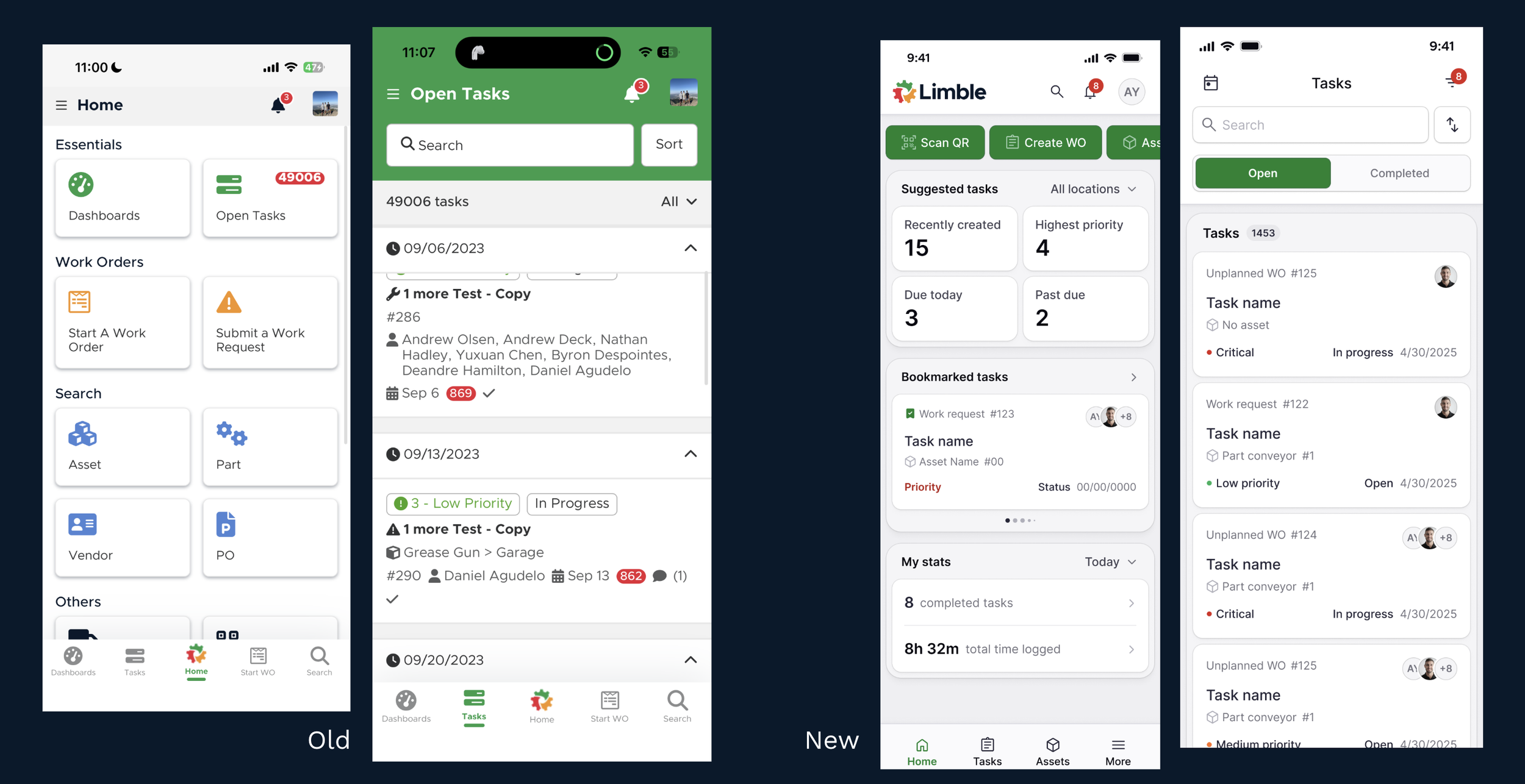
Mobile Re-Imagined
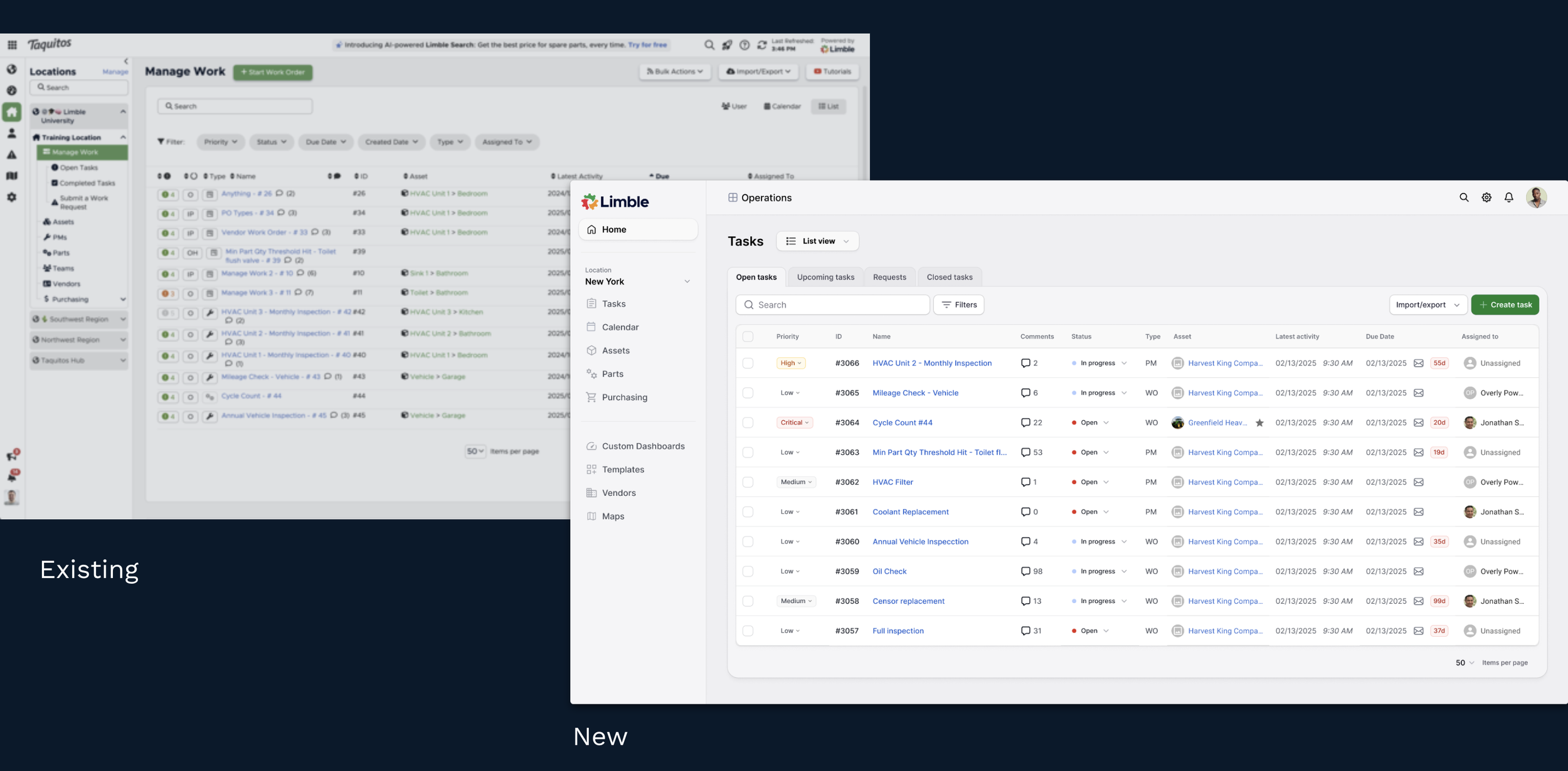
Desktop Re-write
Outcomes
Team Transformation
Shifted from fragmented → highly aligned and collaborative
Built specialized skills aligned to business needs
Created systems that scale beyond current team size
Product Delivery
Delivered mobile re-imagined experience in ~6 months
Led desktop rewrite in parallel
Improved usability, accessibility, and consistency across products
Business Impact
Improved customer trust and satisfaction
Reduced churn risk
Strengthened ability to win new deals
Customers specifically highlighted:
Faster, more reliable experience
Easier navigation and usability
Increased confidence in the product
What This Enabled
A scalable design foundation (systems + process)
A team capable of handling multiple large initiatives
A more consistent, enterprise-ready product experience
What This Demonstrates
Leading through constraint and ambiguity
Turning teams into force multipliers
Balancing delivery with system-building
Driving alignment across orgs under pressure
Making high-leverage tradeoff decisions

This wasn’t just about delivering projects—it was about building the capability to deliver at scale.
By aligning the organization, restructuring the team, and building systems alongside execution, I turned a small, under-resourced team into a high-performing unit capable of delivering complex work in parallel.