Redefining how users access and act on information:
How I led fast, ambiguous AI discovery to a working conversational search foundation
Role: Product & Design Lead (Discovery & Strategy)
Scope: AI-powered conversational search and summarization for Hayes (healthcare and clinical insights)
Timeline: 3 months
Impact: Reduced manual effort, improved information retrieval speed, and established an AI foundation across products
Stakeholders: UX Design, Research, Product Management, Engineering, GTM teams
Overview
Healthcare professionals who use Hayes spend a lot of time searching through clinical studies, medical policies, and appeals data to find the information they need. The speed and accuracy of this work affects treatment and policy decisions, appeals outcomes, and patient care.
I led the exploration and definition of an AI-powered solution to help users find answers about clinical trials faster, while building a foundation that could grow over time.
-
The business launched a top-down strategic initiative to bring AI into the Hayes product. Leadership wanted something to market within three months to stay ahead of competitors and strengthen the product's position. The problem was that no one knew where AI would actually create value for users. Engineering had already built a generative AI chat experience, and the business needed a meaningful use case for it. One hypothesis was that AI could help users extract answers from clinical documents conversationally, but that assumption hadn't been tested.
-
Before anyone invested in design or development, I led a rapid discovery effort to validate where AI could have the greatest impact. Within one week, the team ran user interviews and synthesized insights from Productboard feedback and customer success data. The research revealed a consistent pattern: reviewing documents, finding relevant information, and extracting answers were the most time-consuming, manual parts of the workflow. That confirmed the hypothesis and gave me a clear opportunity to pursue.
-
Hayes users, including policy writers and clinicians, review large volumes of clinical research to build policies and support appeals decisions, for example, evaluating whether a previously denied treatment should be approved based on the latest evidence. Their work required searching across many documents, manually pulling out relevant information, and turning findings into summaries and recommendations. That created slow turnaround times, high mental effort, and real risk of missing important information. The existing search experience didn't match how policy writers and clinicians actually worked.

Decision making inefficiency
The core issue was decision-making inefficiency, not just search:
Fragmented information retrieval. Users had to manually scan multiple documents to find answers.
High-effort summarization. Even after finding information, users still had to interpret and condense it themselves.
Accuracy and trust risks. Manual workflows increased the odds of error or missed detail.
Lack of workflow integration. Search results didn't align with how users actually completed tasks like writing policy updates, conducting appeals review, or verifying insurance coverage.

Why this was hard
This was a high-stakes domain where healthcare decisions require precision, with no established pattern for the right AI solution, low existing trust in AI output, and real cross-functional complexity across design, product, engineering, research, and GTM. We weren't just designing a feature, we were defining how AI would operate within the product and where its boundaries should sit. There were open questions about what AI was actually capable of and whether it could remove enough burden to create meaningful value.
Turning ambiguity into clarity
I co-led a workshop with the product designer to align stakeholders across the business on the biggest challenges Hayes users faced, why they mattered, and the outcomes we were aiming for. I used that session to define the hypothesis that shaped everything after it: if we provide AI-generated answers with clear sourcing, users can complete complex workflows faster, with less effort and greater confidence. By the end, we had alignment on a shared vision, user and business outcomes, success metrics, and technical constraints. That vision became the foundation for every decision that followed.
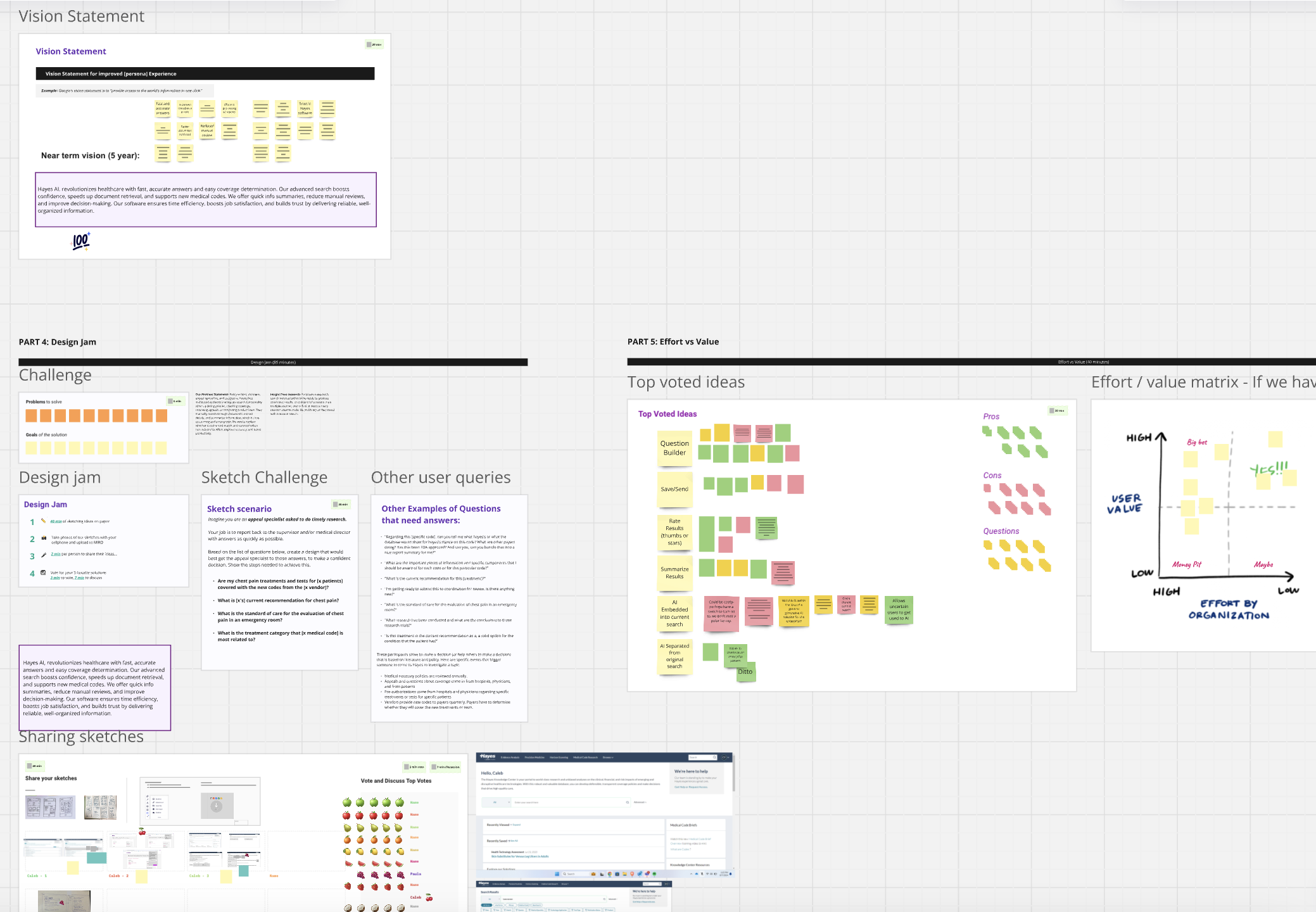
Discovery Workshop Board
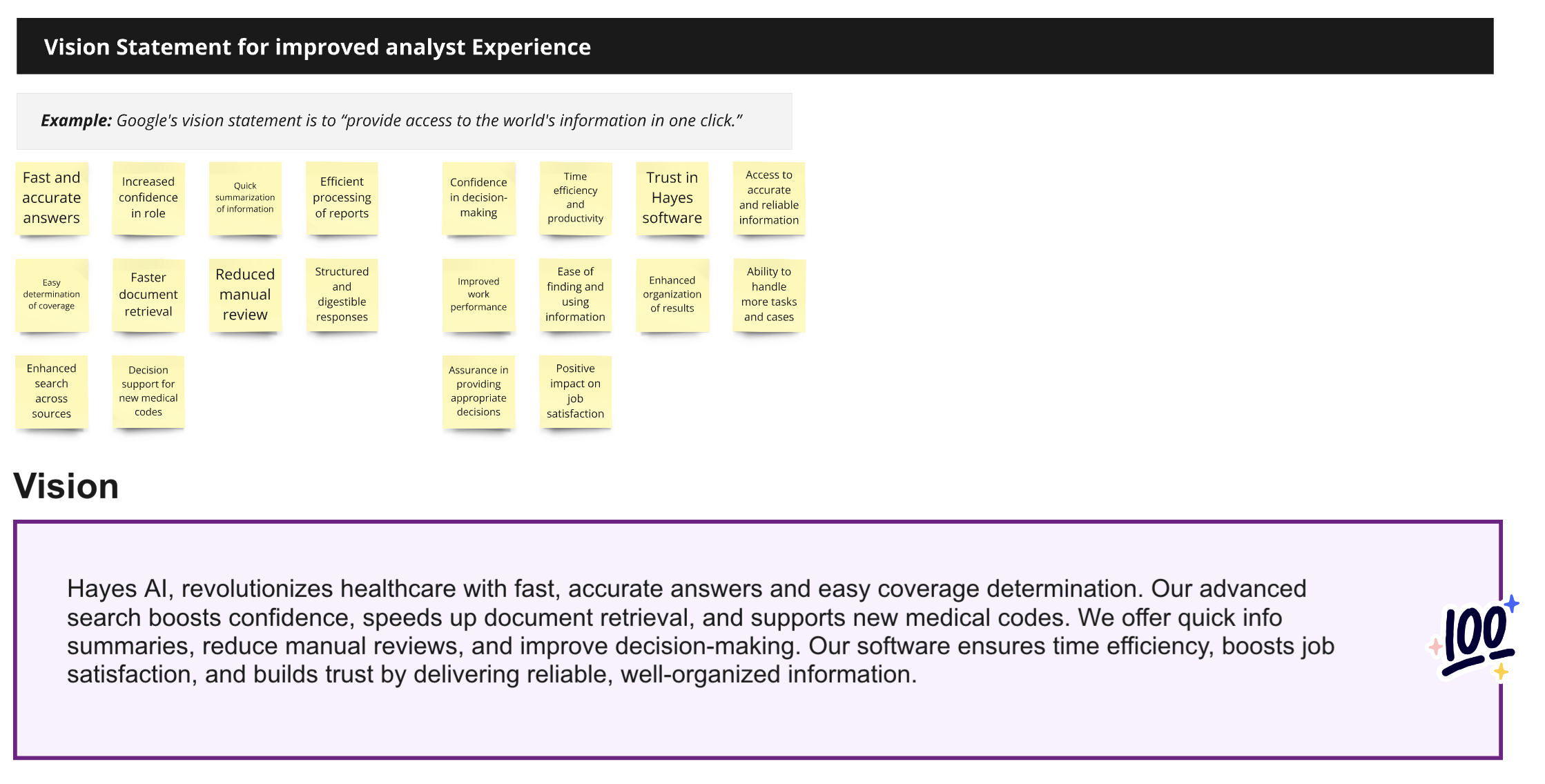
Vision Statement
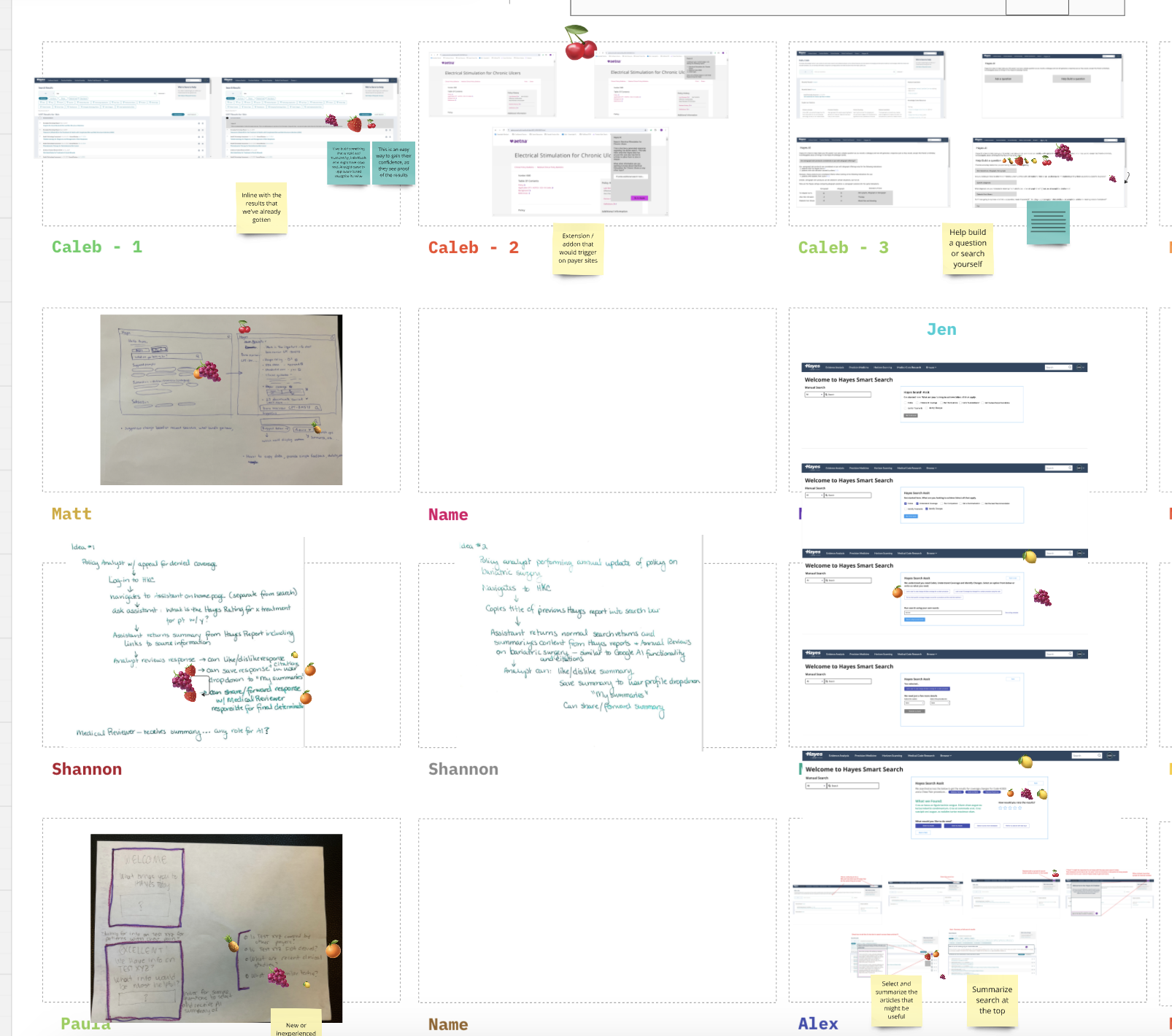
Design jam
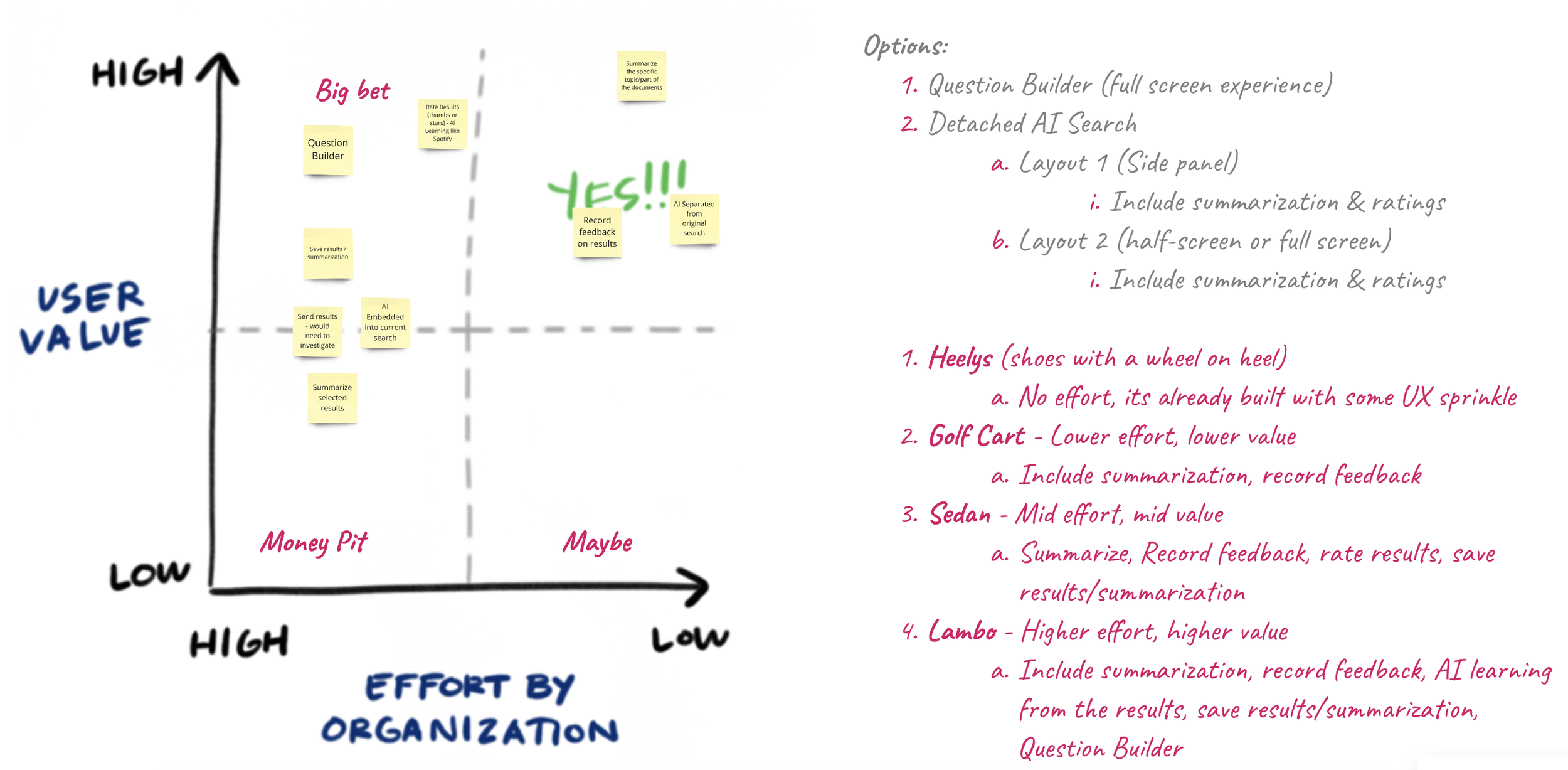
Effort/Value Matrix on our design jam ideas
Exploring solutions together
With alignment in place, the designer and I facilitated a design jam with other designers, product managers, and engineers to explore how AI could reduce the burden of searching clinical evidence. Participants sketched potential solutions, and I evaluated each concept against user impact and design/engineering effort. Several concepts stood out, and we combined the strongest elements into a single solution direction, making the calls on which supporting features, like prompt guidance, saved searches, and result ratings, belonged in the initial release versus later.
Phased approach
I led the team to structure the roadmap into three deliberate phases to control risk and force early learning:
Phase 1, "Roller Skates": Core summarization and feedback, the MVP built to validate the core value proposition of helping users find trustworthy answers faster. Included a few suggested prompts, a prompt entry area, AI-generated responses, and source citations for verification.
Phase 2, "Electric Scooter": Ratings, saved results, and search history.
Phase 3, "Sports Car": Prompt guidance, a prompt builder, and deeper summary interactions.
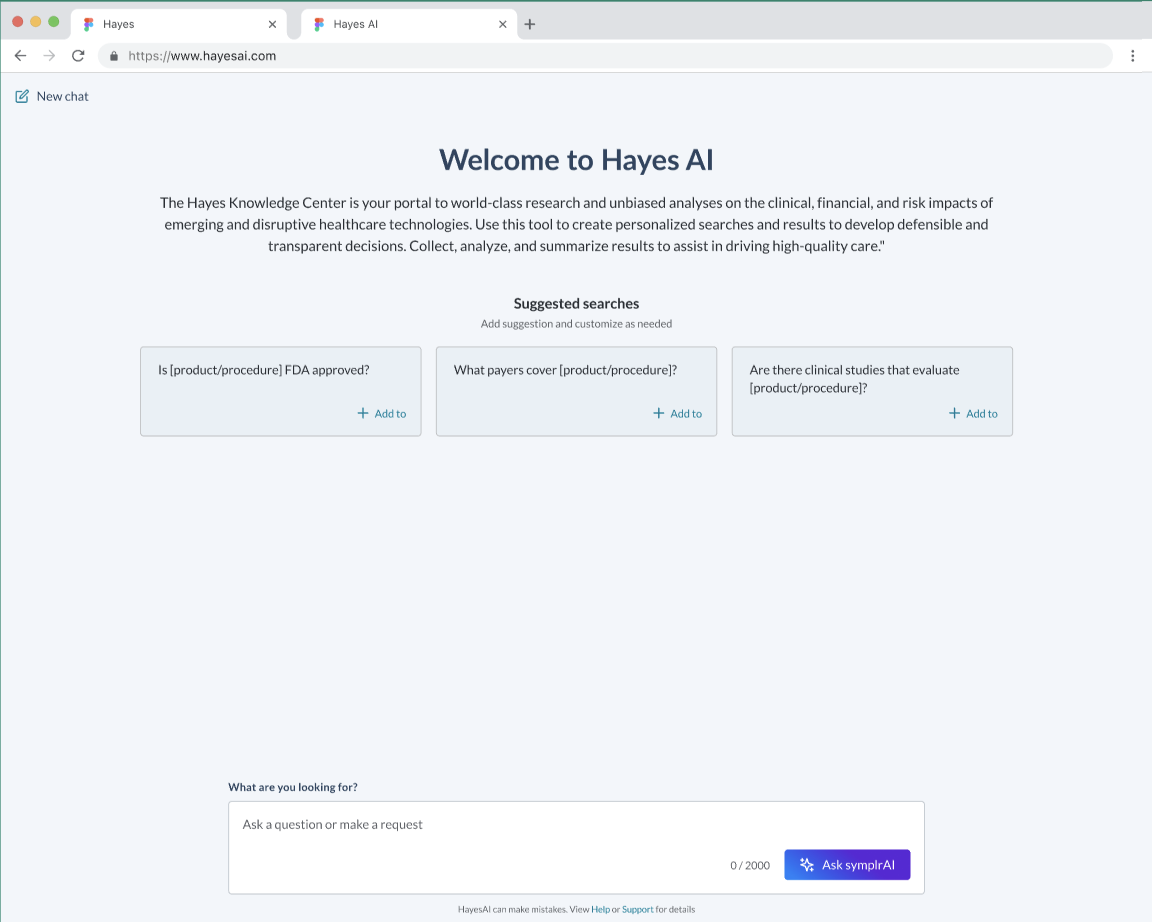
Rollerskates
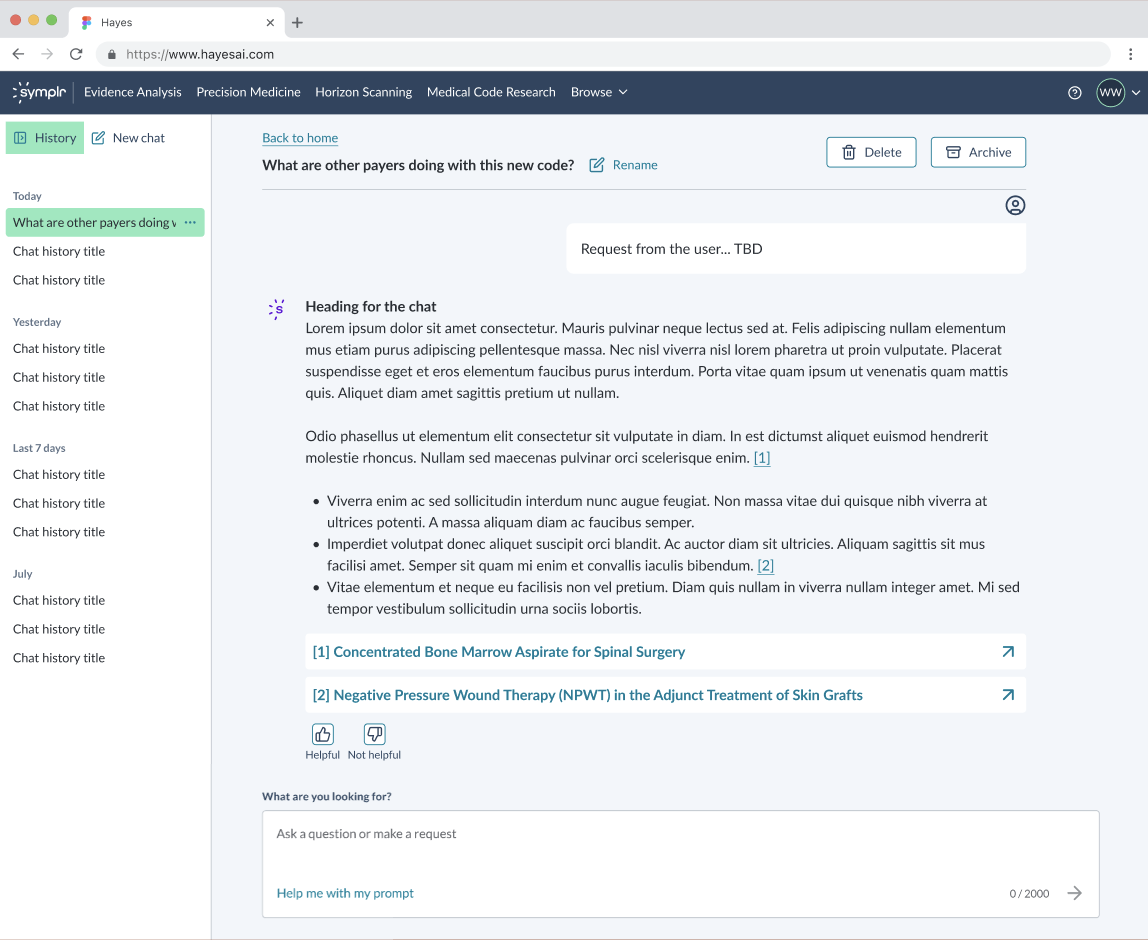
Electric Scooter
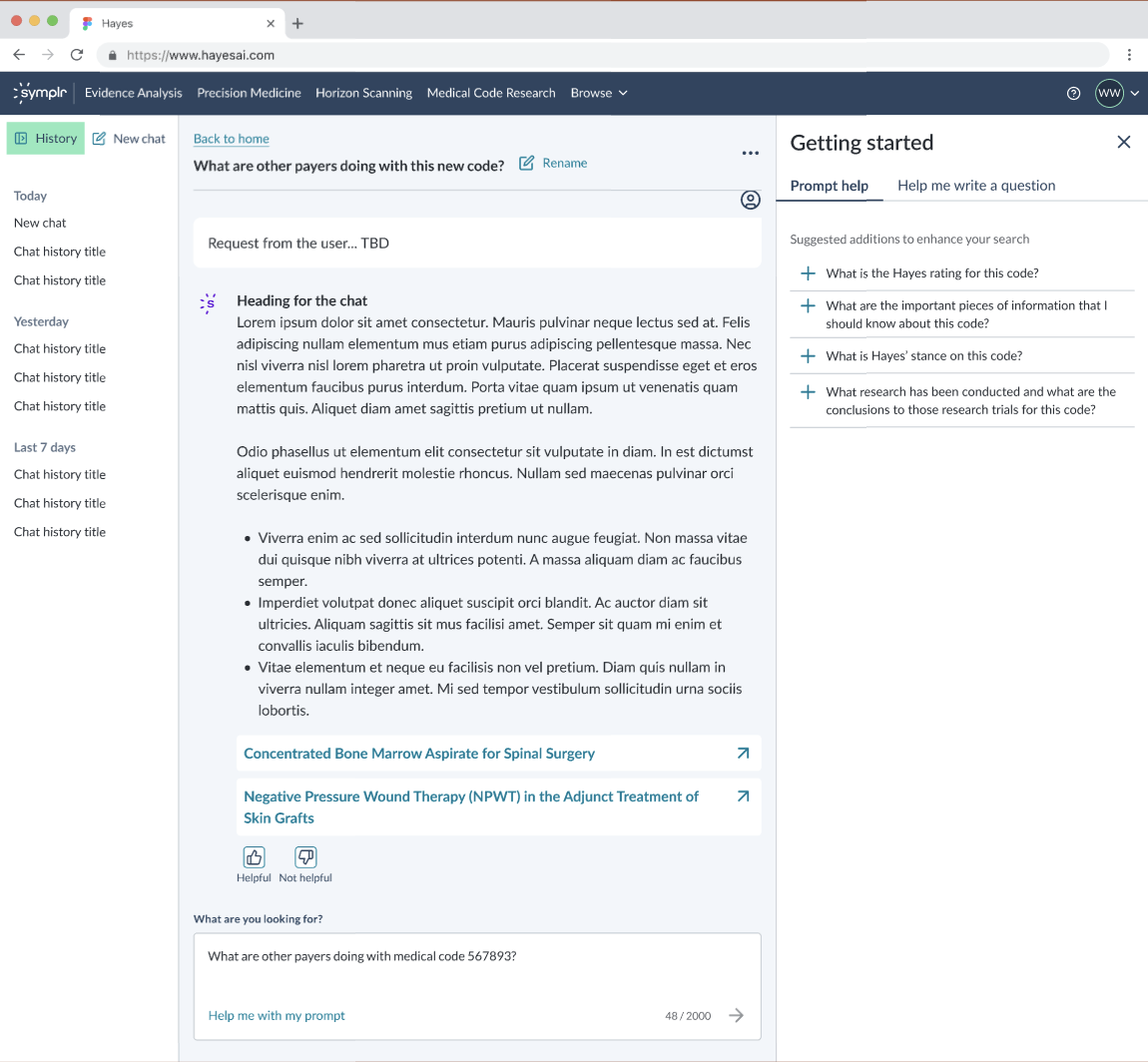
Sports Car
Key decisions
-
We scoped Phase 1 to summarization and conversational search within a contained experience, choosing to validate usefulness before expanding scope. The tradeoff was limited functionality in exchange for faster learning, and I judged that the right call rather than spending months building advanced functionality before we knew it would work.
-
We chose to introduce AI in a dedicated surface rather than embed it into existing workflows, accepting the friction of two separate searches in exchange for reduced risk and controlled testing.
-
I led the team to build the roadmap around progressive milestones rather than a single launch, on the premise that AI quality and trust improve through iteration. Together we accepted that early versions would feel incomplete in order to validate faster.
-
We made source visibility and feedback mechanisms first-class requirements from the start, because adoption depended entirely on whether users trusted the output.
How I Led the Work
I led the initiative end to end, from discovery through execution strategy. In discovery, I facilitated the cross-functional workshops, synthesized user pain points into clear opportunity areas, and defined the initial product vision. In strategy, I translated that vision into a phased execution plan, scoped the MVP to balance speed and value, and defined milestones tied to specific learning goals. In execution, I partnered closely with the designer to shape the experience and kept teams aligned as we moved toward delivery.
Design solution
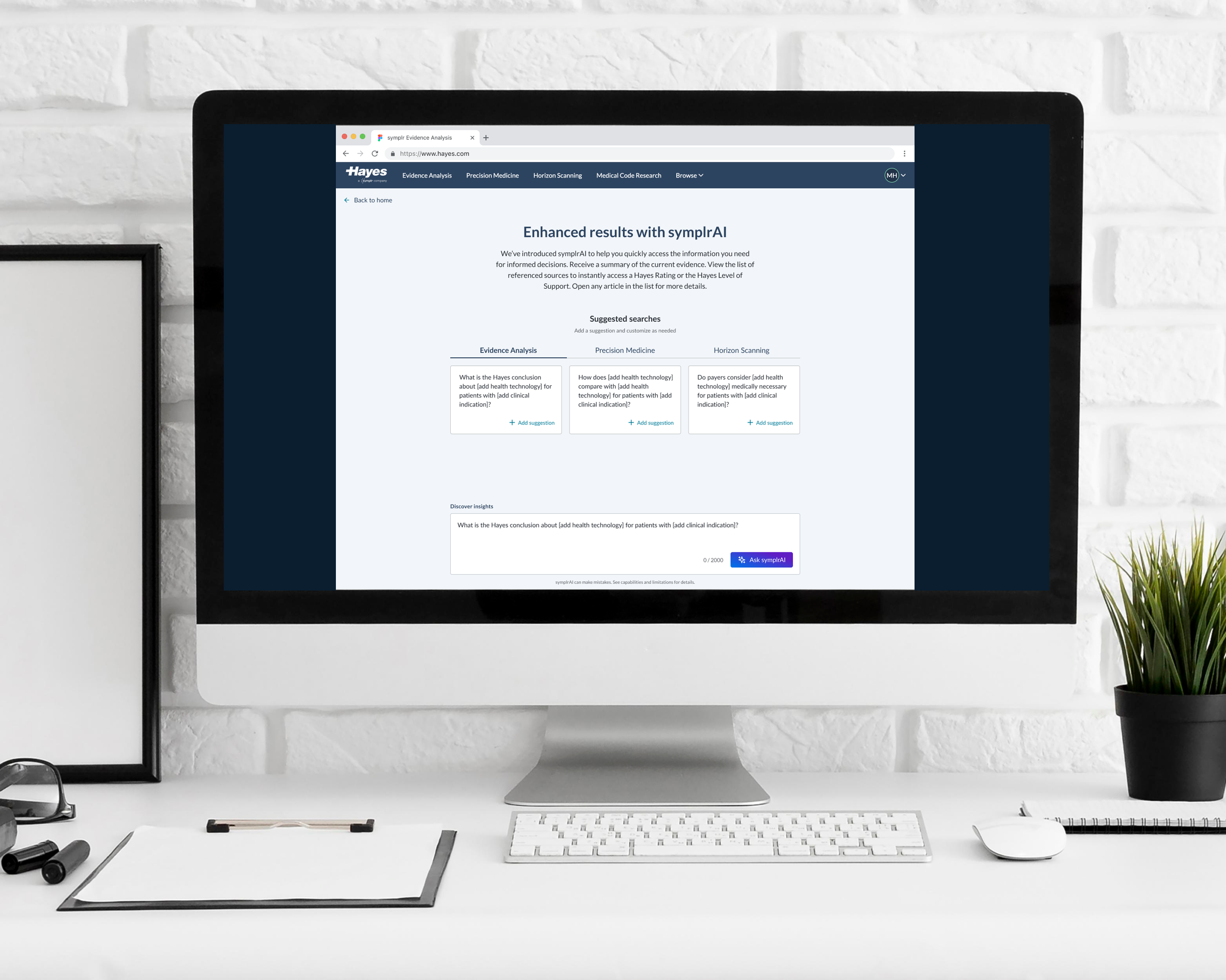
Phase 1 delivered AI-powered summarization, a conversational search interface, and feedback capture for continuous improvement. Users could ask questions directly, receive synthesized answers, and reference supporting sources.
Watch it work!
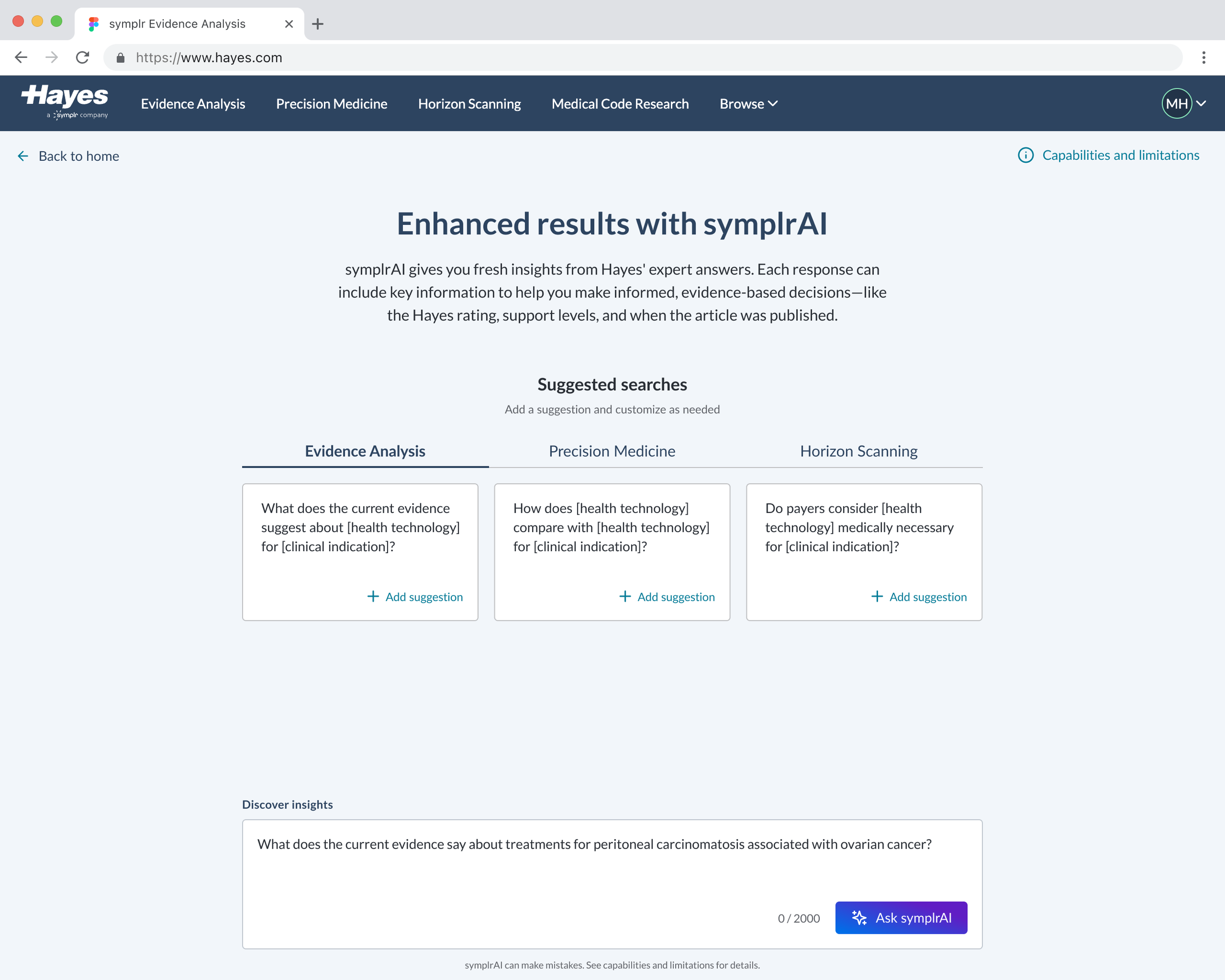
Open the video above to watch me interact with our shipped AI Phase 1 solution.
Early results & learnings
What worked: Users saw immediate value in reduced manual document search, and summarization accelerated information processing.
What didn't work: Users weren't actually saving time, they were still manually double-checking AI output.
Where we saw friction: Users were hesitant to fully trust AI answers, citations lacked the section-level precision they needed, and users expected AI answers to appear at the top of results, Google-style. These insights were fed directly into Phase 2 priorities.
What this enabled
Established an AI interaction pattern across the product, created a foundation for scalable AI capabilities going forward, and enabled faster iteration based on real user feedback.
What this demonstrates
Leading 0-to-1 product exploration in ambiguous spaces.
Translating AI potential into practical, testable solutions.
Balancing speed, scope, and user trust. Driving alignment across cross-functional teams.
Designing for learning and iteration, not just delivery.
Final takeaway
This work wasn't just about adding AI, it was about redefining how users access and act on information. By starting small, prioritizing trust, and iterating quickly, I turned a complex, manual workflow into a foundation for faster, more intelligent decision-making.